
Energy Buyers Toolkit: reports on corporate renewables procurement
RE-Source's reports are part of the Energy Buyers Toolkit - providing corporate energy buyers with a free and easily understandable introduction to the world of renewables procurement.


The GHG Protocol Corporate Accounting and Reporting Standard provides requirements and guidance for companies and other organizations preparing a corporate-level GHG emissions inventory.
The standard covers the accounting and reporting of seven greenhouse gases covered by the Kyoto Protocol – carbon dioxide (CO2), methane (CH4), nitrous oxide (N2O), hydrofluorocarbons (HFCs), perfluorocarbons (PFCs), sulphur hexafluoride (SF6) and nitrogen trifluoride (NF3). It was updated in 2015 with the Scope 2 Guidance, which allows companies to credibly measure and report emissions from purchased or acquired electricity, steam, heat, and cooling.
 Read more

In 2021, RE-Source and the Climate Group decided to join forces to host the Communicators for Change Taskforce, a new group for senior communications professionals committed to promoting the benefits of renewables.
The group is an opportunity for peer-learning and provides a safe space for leaders to share challenges and ideas for continuous improvement. Members of the taskforce include Asahi Europe and International, Bosch, CHANEL, Decathlon, Nestlé, Nissan and Sanofi.
We’ve published a number of pieces sharing the insights from the group covering communicating your business strategy for renewables, communicating with employees, communicating with customers and how to effectively balance your ambition with reality.
You can download our Best Practices Manual here, which brings together case studies on how to communicate a business’ renewable journey and strategy to each of these audiences.
Read more

This report reveals the large untapped potential and value for corporates to deploy renewable energy and storage installations on commercial and industrial buildings or within its premises. The report describes innovative business models that companies can use to benefit from the large untapped value and provides recommendations to EU and national policy makers to unlock the potential.
Read more

From the joint RE-Source and Eurelectric 24/7 Task Force, "A Timely Match" explores how to enable greater adoption of round the clock matching of corporate electricity demand and renewable electricity supply in a timely and cost-effective manner.
Read more

As part of their sustainability strategies, companies across the globe are entering into power purchase agreements (PPAs) with renewable energy generators. This paper aims to help address issues surrounding accounting for corporate renewable PPAs.
Read more

The goal of this paper is to support continuing innovation in the way companies purchase renewable power for their operations.
A multi-technology PPA covers multiple projects of different technologies (such as wind, solar, biomass, geothermal or hydro). The research within the paper investigates if and how multi-technology PPAs could offer benefits to developers and/or corporate buyers by reducing some of the risks commonly seen in PPAs.
Read more

This report aims to help companies understand the technicalities of cross-border PPAs by providing a balanced view of the risks and opportunities that the cross-border PPA structure can provide.
Read more

Interest in corporate renewable power purchase agreements (PPAs) has soared in recent years, with companies wanting to gain greater visibility of their future electricity costs and decarbonize. While 2020 saw electricity demand decrease in many markets due to the COVID-19 pandemic, companies continued to procure electricity via PPAs, with capacity even increasing by 18% year on year compared to 2019 levels, according to BloombergNEF.
This report aims to help businesses benefit from PPAs by providing an outline of the various pricing structures available, and commentary on their respective risk impacts, regional variations and settlement considerations to help businesses understand feasible options that are suitable for them.
Read more

This report, written by experts in the field, describes the risks that corporates need to be aware of when considering a long-term power purchase agreement (PPA) and provides examples of mitigating services and tools which can be used to mitigate some of the risks. It will help corporates on their way to signing a PPA and contributing to the build-out of new renewable power.
Read more

Energy Traders Europe, formerly EFET, and RE-Source produced a template PPA contract - the first cross-country standard for Europe. Starting with a template contract facilitates the negotiation process between the parties involved, and therefore can reduce costs. Prior to adoption, the template was reviewed and endorsed by Energy Traders Europe's Legal Committee and industry. It was also reviewed by a number of financial lenders, who confirmed the template's bankability. The template allows for both physical and financial PPAs, and is available in several languages.
Read more
This report includes the different strategies a corporate can follow to procure renewable electricity in Europe. An excellent introduction into the world of corporate renewable energy sourcing for anyone looking to understand the market, this report discusses the different business models and their key features.
Read more
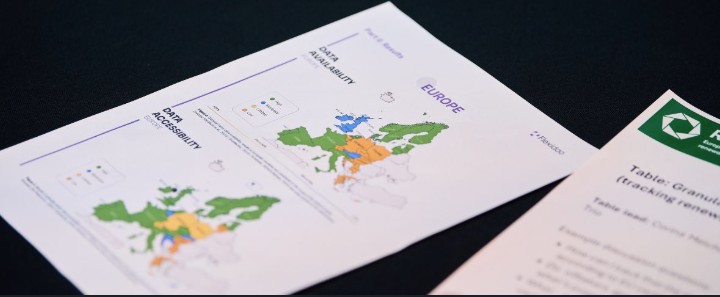
Corporate power purchase agreements (PPAs) are a key part of Europe’s energy transition and industrial decarbonisation, increasingly recognised in European policy – from the Clean Industrial Deal to the Affordable Energy Action Plan and the 2024 reform of the Electricity Regulation (Regulation (EU) 2024/1747). These long-term power contracts between renewable energy buyers and suppliers provide predictable energy prices, facilitate decarbonisation, and drive new investments in renewable energy. Nevertheless, while demand for PPAs is growing, deployment across European markets and industries remains uneven. This report identifies enablers and drivers for the development of PPAs, outlining challenges and solutions.
Many issues impacting the broader renewables roll-out, impact PPAs. The EU institutions and Member States must focus on removing these bottlenecks, whilst adopting targeted policies and support for PPAs. If these efforts are undertaken, there is huge potential demand for PPAs. This will drive forward Europe’s renewable energy and industry decarbonisation targets.
Read more

Learn how to understand the carbon matching accounting methodology and how corporate energy buyers can build it into their procurement strategy
Read more

This report provides information on European renewable electricity procurement strategies for corporates looking to start making a positive impact on the environment, with a focus.
Read more